Mortality
Death Rates (All Ages)
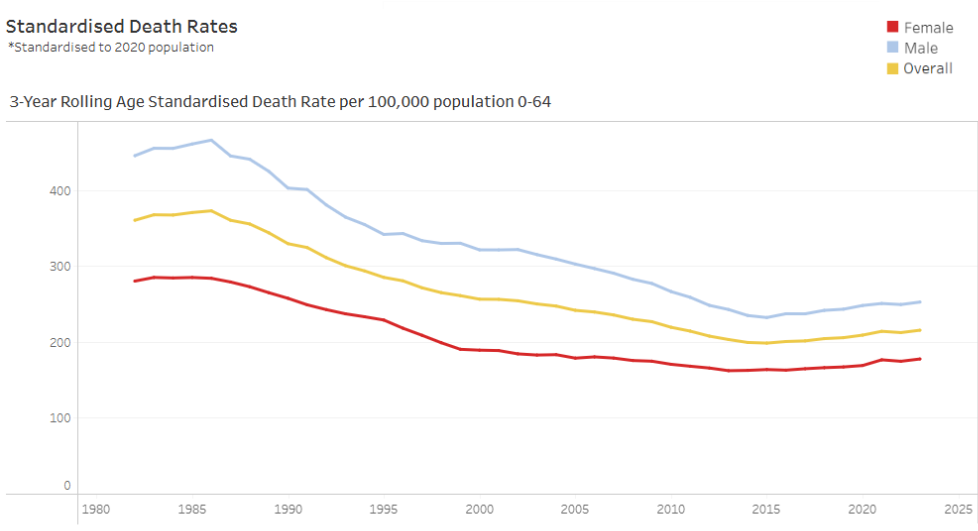
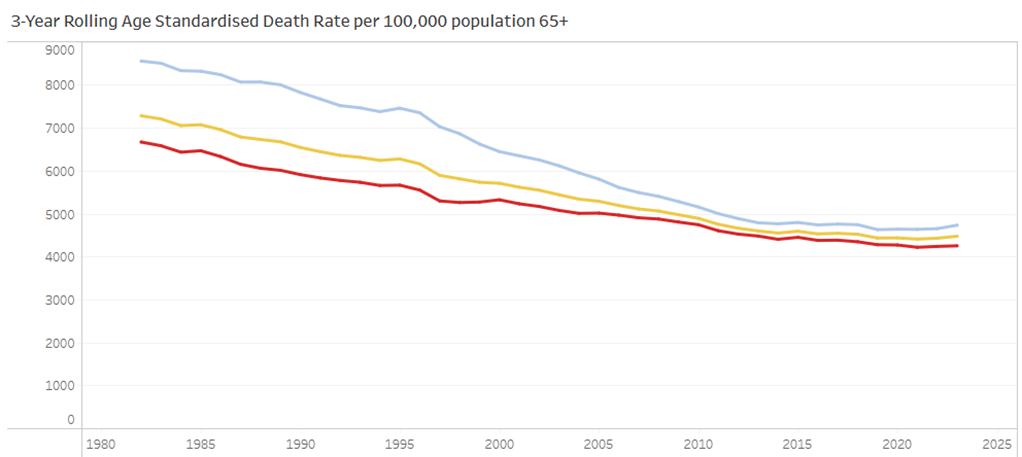
Death rate in a population is an important measure as it gives a good indication of the health and well-being of the population. Information on deaths (all ages) are based on a 3 year rolling average number and directly age sex standardised rate per 100,000 population. Figures x and x show the trend in age standardised death rates overall for Grampian and broken down by sex for the under 65Y (0-64) and, 65Y and over age groups, respectively.
In both these age groups, the death rate for males is consistently higher than for females at all time points. The under 65 year old male age standardised death rate halved between the 1980s and 2015 before gradually rising. A similar, but less dramatic trend is evident amongst females aged under 65. A similar trend is evident amongst over 65s.
Figure x – Trends in age standardised deaths rates (per 100,000 population) for under 65Y population

Figure x – Trends in age standardised deaths rates (per 100,000 population) for under 65Y population

Causes of Deaths
Understanding the main causes of death in Grampian helps identify what the key health challenges being faced by the population are and informs the most appropriate public health strategies to target them.
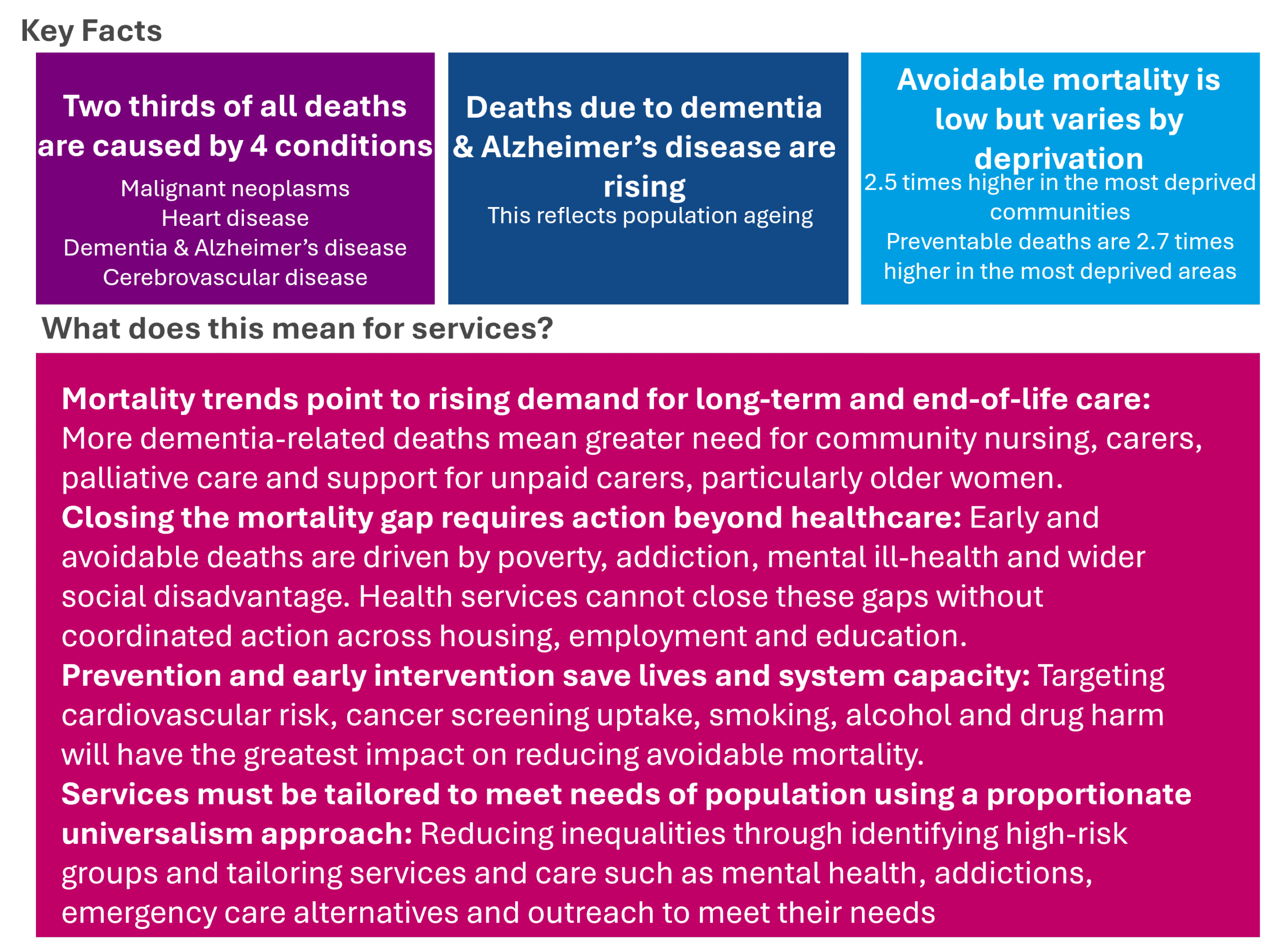
Figure x summarises the top 4 causes of death in Grampian from 2017-2024 and how these have changed over time. The top 4 cause of death groupings: Malignant Neoplasms, Heart Disease, Dementia & Alzheimer’s Disease and Cerebrovascular Disease account for around two thirds of all deaths in Grampian. Whilst the death rate shows some fluctuation each year for these causes, there appears to be a rise in dementia and alzheimer’s deaths (which is not unsurprising as people are living longer), a fall in cerebrovascular disease, and similar rates of both malignant neoplasms and cardiovascular disease.
Figure x – Top 4 main groups of causes of death for Grampian (2017-2024)

When we look at individual causes of death in 2024 by gender (Figure x & x), acute myocardial infarction and Malignant Neoplasm of Bronchus and Lung were the two most common causes of death for both males and females. However, the relative contribution of each cause to the overall profile of causes of death for males and females was slightly different. For males, acute myocardial infarction was the number one cause and was proportionately larger than for malignant neoplasms (bronchus and lung, unspecified). For females, malignant neoplasms ((bronchus and lung, unspecified) was the number one cause, closely followed by acute myocardial infarction, vascular dementia and dementia unspecified.
These differences in profiles of deaths are important to consider particularly in relation to an ageing population with proportionately more females, who will spend proportionately more years in bad health.
Figure x – Top 20 causes of death in males

Figure x – Top 20 causes of death in females