
Burden of Disease
Burden of Disease in Scotland: Forecast
Burden of disease forecasts are important to inform how we identify and define our public health priorities, and shape our services to meet the changing needs of our population. The most up to date information on this can be found here Overview – ScotPHO.
Key facts about the Scottish Population (taken from the Scottish Burden of Disease Forecasting Briefing )
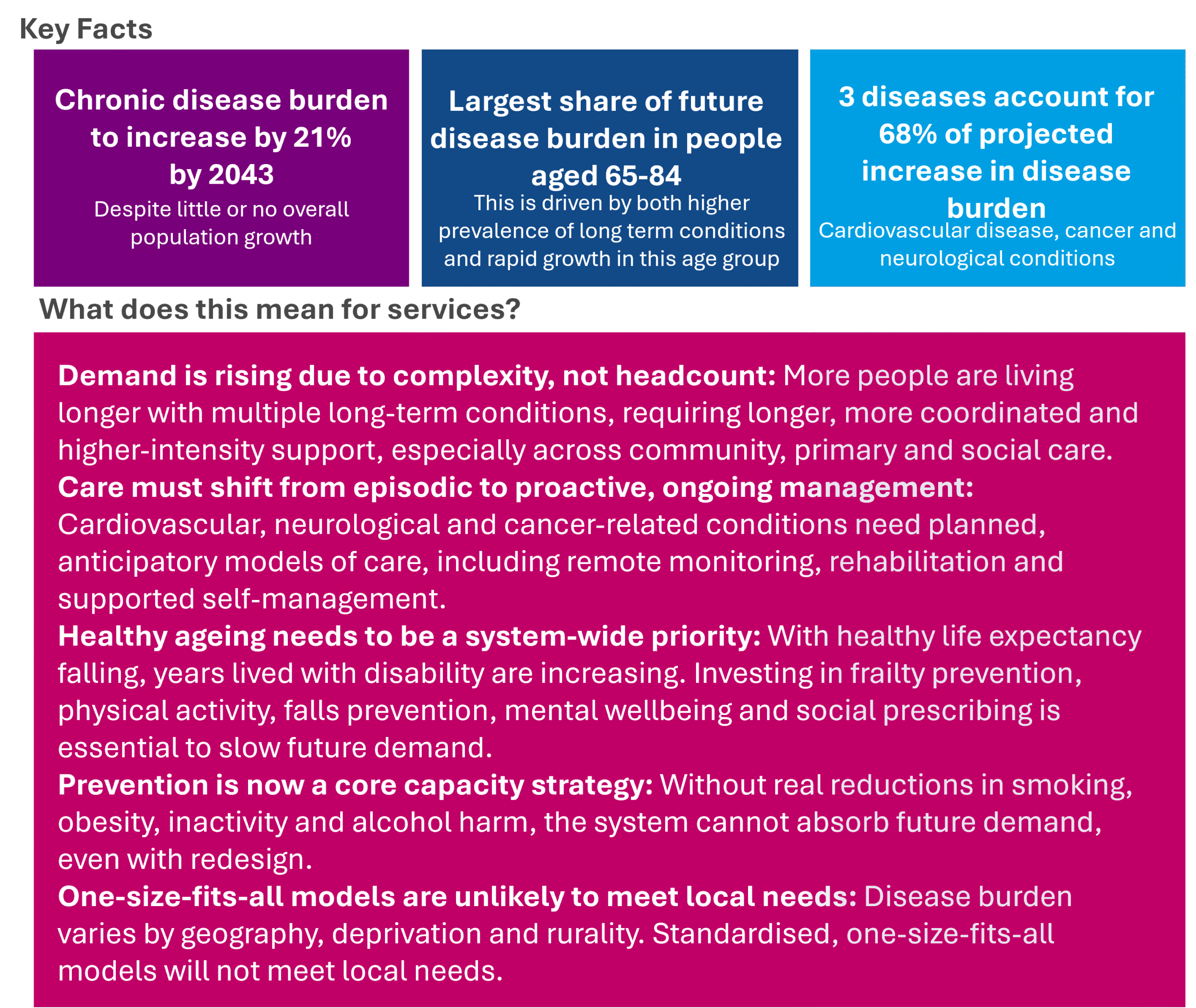
- Despite an overall decline in the projected population in 20 years’ time, the annual disease burden is forecast to increase 21% over a similar period.
- To achieve a similar level of crude disease burden as 2019, the forecasted annual disease burden in 2043 would need to reduce by 17% which is equivalent to eradicating the entire disease burden of cancer in 2019.
- In terms of overall health needs, the sub-group with the largest forecasted annual crude disease burden is those aged 65 to 84 years. This is due to the interaction between the extent of health needs and increasing size of this population sub-group.
- Cause-specific forecasts indicate that the five leading grouped causes in 2019 are the same as those forecast to be the leading causes in 2043.
- Absolute increases in annual disease burdens are forecast to be largest for cardiovascular diseases, cancers, and neurological diseases. These three disease groups account for 68% of the total increase in forecasted disease burden.
- Forecasted relative increases in annual disease burdens highlight increases for: common infectious diseases; unintentional injuries; diabetes and kidney diseases; and chronic respiratory diseases.
- These estimates only account for projected demographic changes (i.e. the expected changes in the number of people and their ages) and assume that disease prevalence rates remain the same in 2043 as in 2019. They do not take into account changes in disease prevalence and mortality that could occur due to changing risk factor profiles, access to services or advances in prevention and treatment.
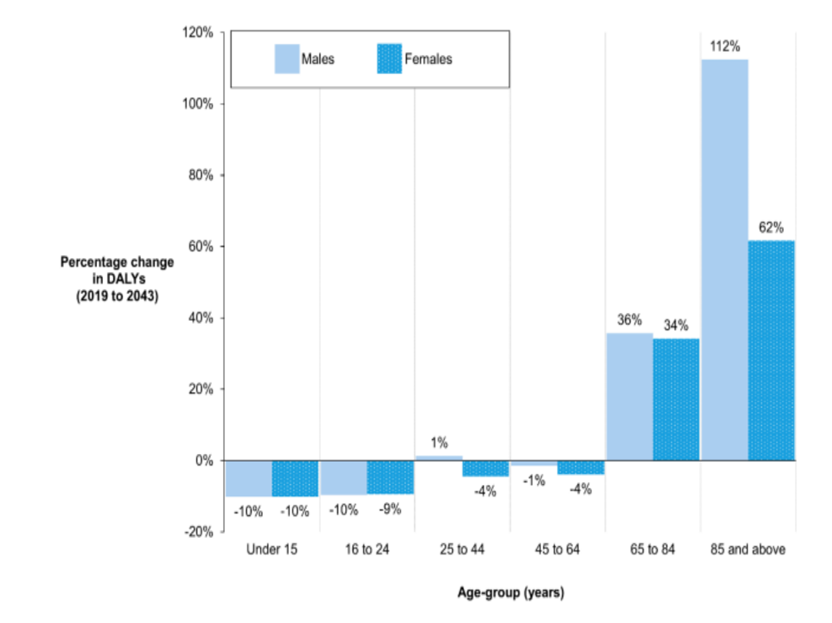
A 21% increase in the burden of disease (a measure called ‘Daily Adjusted Life Years’ is most commonly used for this) is forecasted in Scotland between 2019 and 2043, with the largest increase being seen in those age 65 years and above (Figure 30). This ageing population is already evident in Grampian (see Figure 5 in the population demographics section (age breakdown) showing the age breakdown pyramid).
This increase is forecasted to be driven in the main by increases in particular conditions: cardiovascular diseases; cancers; neurological disorders; chronic respiratory diseases; diabetes and kidney diseases; and common infectious diseases. This points to a growing need for preventive action across the life course: tackling obesity, physical inactivity, smoking and alcohol, and improving early detection to prevent the system becoming overwhelmed.
Whilst the burden of disease in the under 15 year and 16-24 year age groups is forecast to fall this prediction does not take into consideration worsening of causative factors such as the impact of the COVID-19 pandemic on childhood obesity and its contribution to the failure to reduce the rise in obesity in primary-school aged children (https://www.scotpho.org.uk/media/2631/2025-03-18-scottishburdenofdisease-chronicliverdisease.pdf). This impact will lead to a worsening of the epidemiology trend and an under estimation of the forecasts for the obesity-attributable disease burden.
Figure 30 – Percentage change in DALYs (2019-2043) by age group. Click on the image to make it bigger.
The most recent summary of local area burden of disease reports can be found at:
Back to Top
Next to Mortality
Back to Overview of Grampian’s population characteristics and health status