
Grampian’s population, its health and what it means for service planning
The format of the content of the following webpages are based on the data domains described in the JSNA consensus guidance Appendix E (Appendix E – Data domains & topics – Hi-Net Grampian) to help ensure consistency in how data is used across Grampian.
Headline facts and figures and what it means for the Grampian population and service provision
- Grampian is undergoing significant demographic and health transitions that have important implications for regional policy and planning. The population is ageing, with a growing proportion of residents aged 65 years and over, leading to increased demand for services related to chronic conditions such as cardiovascular disease, cancer, and neurological disorders. Grampian is home to 625,636 people in 2025, with the population growing from migration but ageing rapidly. Aberdeenshire now accounts for the largest share, followed by Aberdeen City and Moray.
- While life expectancy in Grampian remains above the Scottish average, recent trends show a stalling of progress, particularly in Aberdeen City and among more deprived communities. Healthy life expectancy has also declined, with men in Aberdeen City now falling below the national average. These trends highlight widening health inequalities across the region.
- The child population is also shifting. A notable 23% decline in the under-5 population since 2014 reflects falling birth rates, while infant mortality has risen sharply—even in less deprived areas. At the same time, there are modest increases in older child age groups, and growing concerns about mental health and wellbeing among children and adolescents, evidenced by increased referrals to CAMHS and rising levels of low mood and loneliness.
- Looking ahead, the region faces a projected 21% increase in disease burden by 2043, driven by an ageing population and the growing prevalence of long-term conditions. The legacy of the COVID-19 pandemic, particularly its impact on childhood obesity, may further compound future health challenges.
- These trends underscore the need for integrated, data-informed policy responses. Priorities include strengthening cross-sector collaboration, addressing health inequalities, investing in early years and maternal health, expanding mental health support, and prioritising prevention and early intervention strategies.
- The combination of an ageing population and declining birth rate means demand will rise for long-term conditions management, community care and end-of-life support, while the working-age population shrinks, creating workforce challenges across sectors.
Figure 1 below illustrates the population challenges in Grampian and how many are hidden from view due to the role of factors such as deprivation and inequality have on determining and shaping the health of the population.
Figure 1 – Infographic highlighting Grampian’s population challenges and unveiling the hidden factors that shape its health. Click on the image to enlarge.
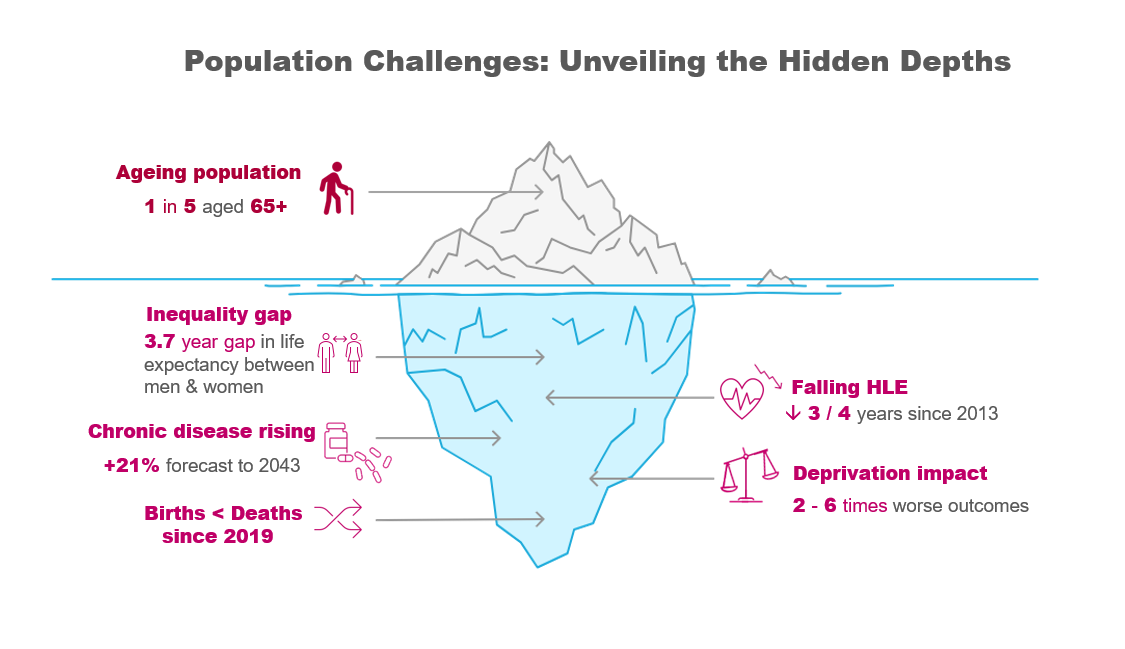
Figure 1 highlights that the:
- Grampian’s population is growing older, more diverse and more unequal, with one in five people now aged over 65 and there is a 3.7 year age gap in life expectancy between men and women.
- While life expectancy is high, healthy life expectancy is falling, meaning more years lived with ill health. Between 2013-15 and 2021-23, it has fallen by 3.3 years for males and 3.9 years for females.
- The annual chronic disease burden is forecast to increase 21% by 2043.
- Preventable diseases and inequalities continue to drive poor outcomes, particularly in deprived and rural communities.
The key to a healthier Grampian lies in prevention, equity and resilience: investing earlier in life, addressing the social roots of health and designing services that work for everyone, everywhere.
Back to Top
Next to Population Demographics